
Product · A risk spotted too late
Aura Control Tower
You hear about the shortage when the customer calls. Aura spots it in your data, traces it to its cause and gets you deciding before it hits.
For: supply chain, procurement, buying and planning leaders · sponsored by the CFO and executive committee
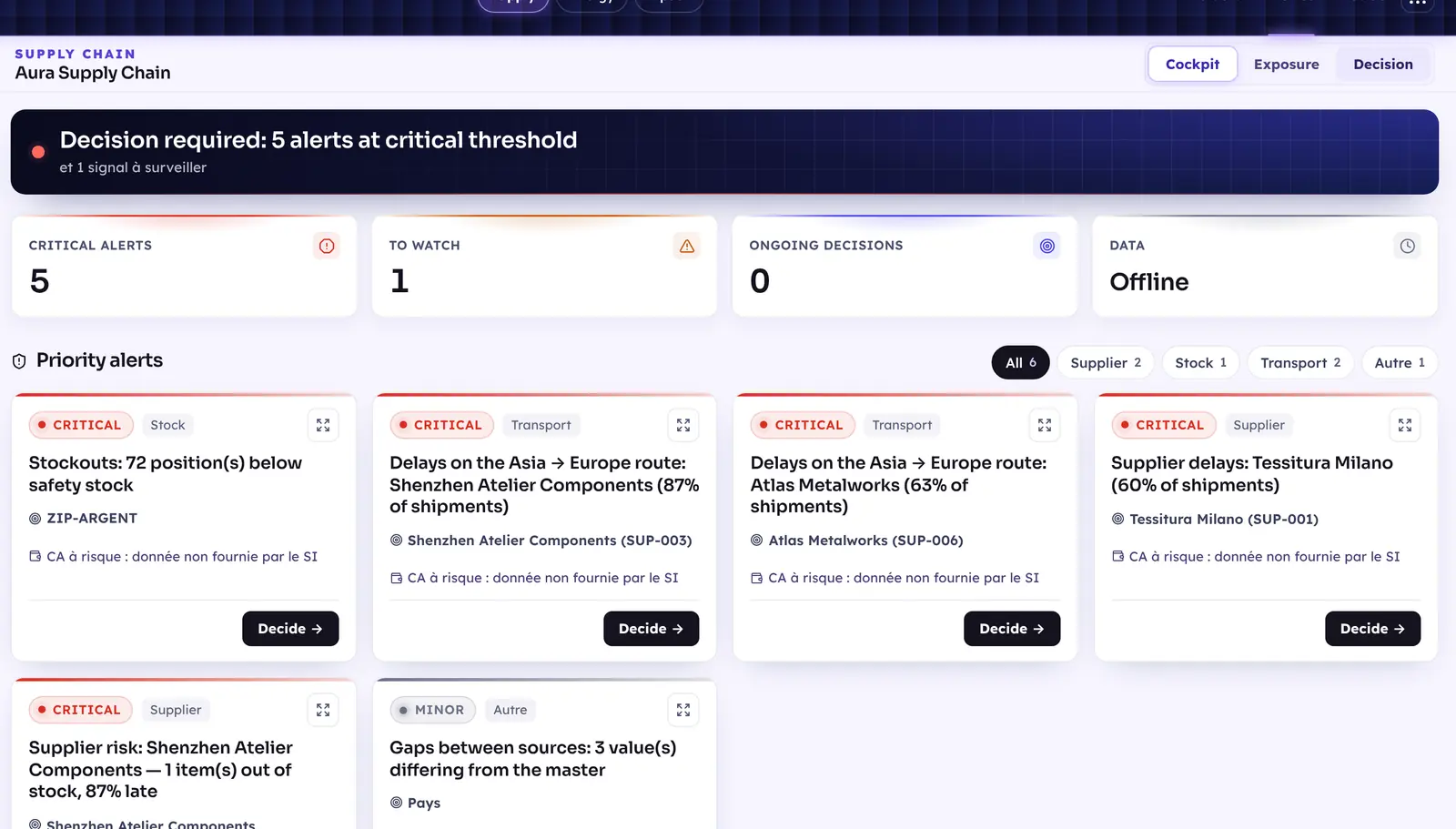
The decision control tower: it reads your systems, applies traceable causal rules, and every alert opens a decision. Supply, Energy packs and more.
- The signalThe alert lands before customers feel it.
- The causeReadable causal chain, source of every attribute.
- The decisionOptions compared, with or without data.
- Follow-upEvery decision tracked in the log.
The decision engine
The decision engine a decision-maker sets up alone, in minutes.
For decisions too complex for intuition and too short on data for analytics.
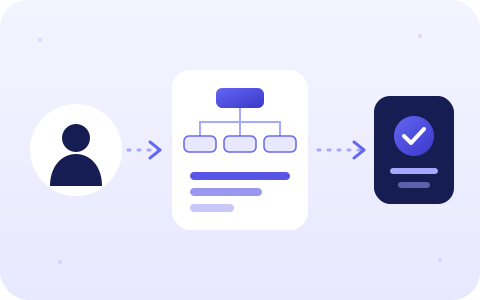
- You describe the situationIn your own words: the stakes, the options, the constraints.
- Aura structures the modelObjectives, criteria and options, for you to adjust.
- You assess each option against each criterionYour judgement, one elementary assessment at a time.
- The decision is computed and explainedOptions ranked, with the reasons behind the ranking.
- Explainable to a board or a regulator.
- Recomputed as soon as a parameter changes.
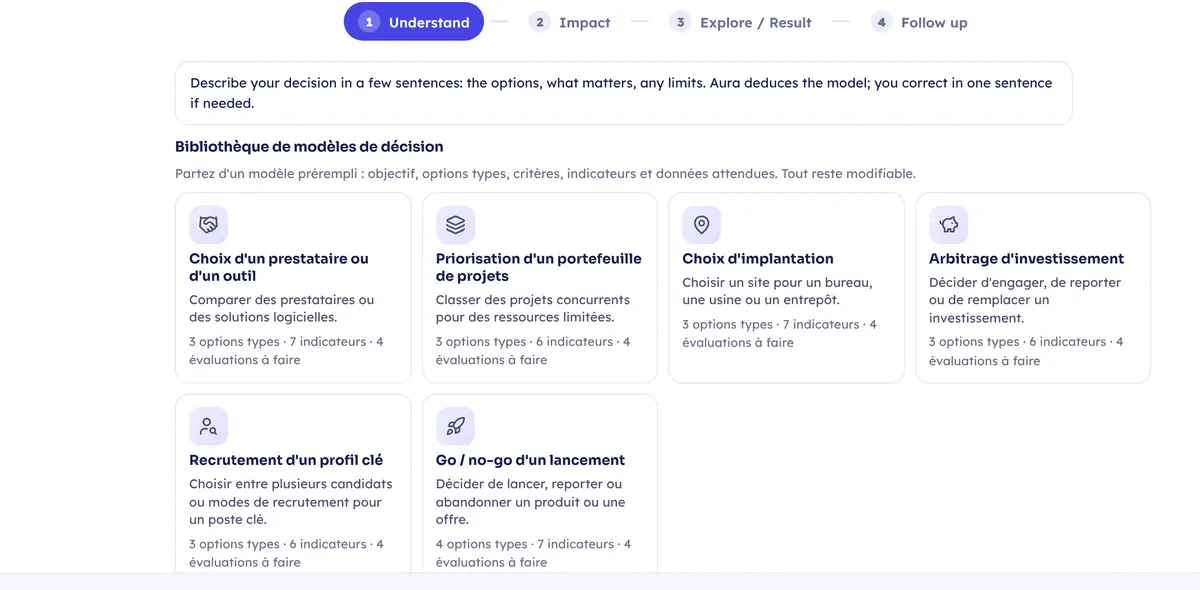
Decision model library
Start from a ready-made model, per Control Tower.
Supply Control Tower
- Volatile demandCover through stock, capacity or the delivery promise.
- ProcurementStock coverage, supplier contract, risk monitoring.
- LogisticsTransport mode, warehousing, flow management.
Generic Control Tower
- Solution choiceLevel of customisation, implementation support, go-live.
- InvestmentFinancing, maintenance, ramp-up.
- StrategyPace, mode of entry, financing.
- Open decisionPace, delivery, follow-up: adapt it to your case.
What’s new · September 2026
Just landed in Aura Supply.
- Maison Lucie demo in one click, or step by step“One click” loads the full demo; “Step by step” is the normal path on your own systems.
- All the real protocols of your toolsThe Maison Lucie demo system answers through each tool’s real access modes (APIs, databases, EDI, files, streams), and through an MCP server.
- 12 resilience alerts from causal rulesSingle supplier, strait, tied-up stock, product recall… each alert shows the values read from your systems and the assumptions to confirm.
- “Why it holds” and a PDF mini-reportEach recommendation explains its risk attitude, the combinations explored and the smallest change that would flip it.
- Hosting in the European UnionApplication on Vercel in Paris (cdg1), Supabase database in the EU, Mistral language model in the EU.
- Training books, collaboration on the wayTraining books for Supply (with Decide) in French and English. Comments, mentions and assignment: being rolled out.
For CIOs
Risk-free integration for your IT landscape.
- No bulk copyData stays in your systems. Aura keeps only light aggregates.
- Your systems protectedLoad caps, heavy extractions at night, automatic throttling when a source weakens, no direct production access by default.
- Clean integration (DDD)One anti-corruption layer per source, a single business model, one master application per attribute. Aura doesn’t impose its model.
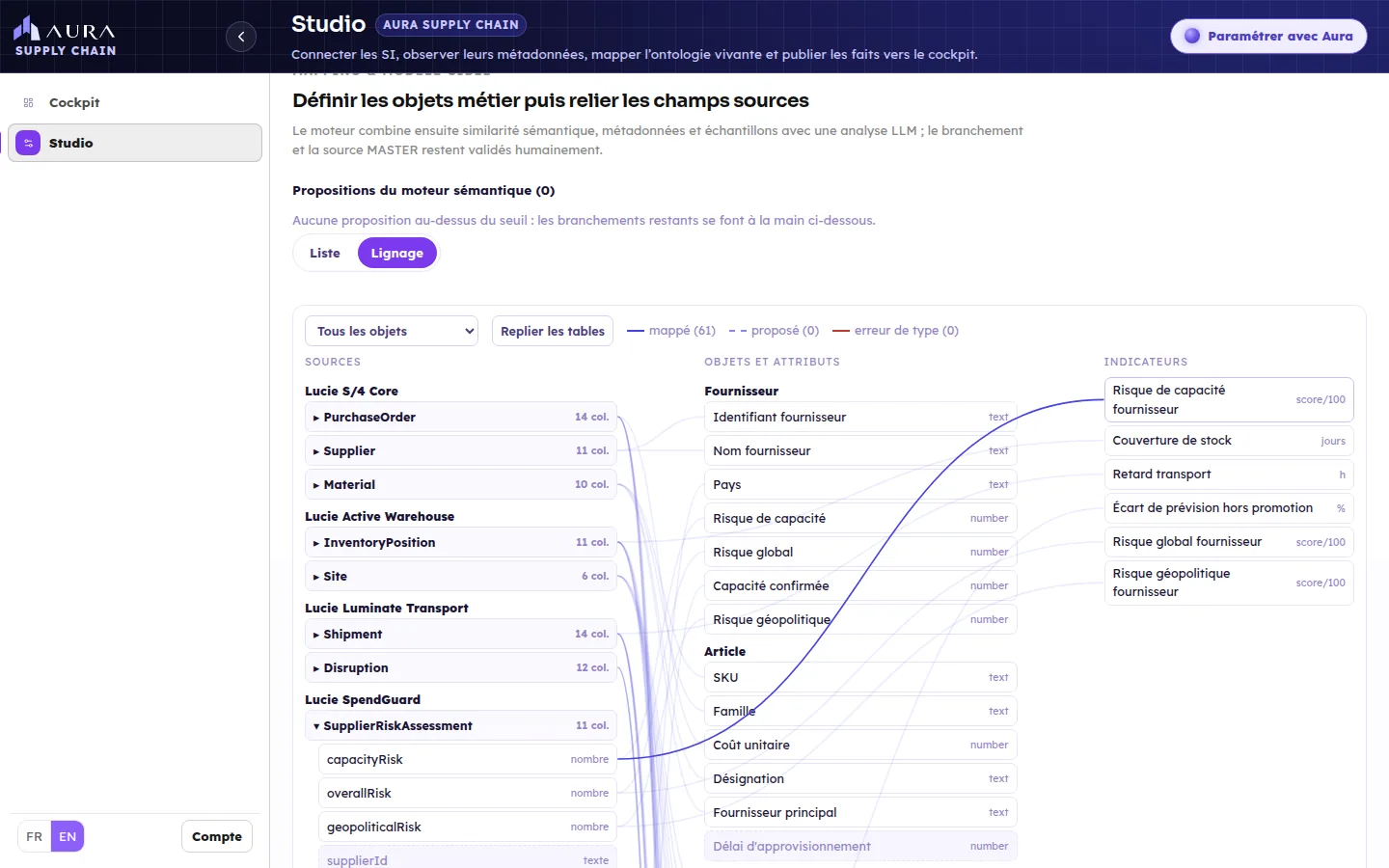
- Guided connectionA questionnaire per business object, automatic metadata reading, a proposed and scored mapping, human validation.
- Server-side credentialsNever in the browser, with access limited to synchronisation windows.
Inside the application
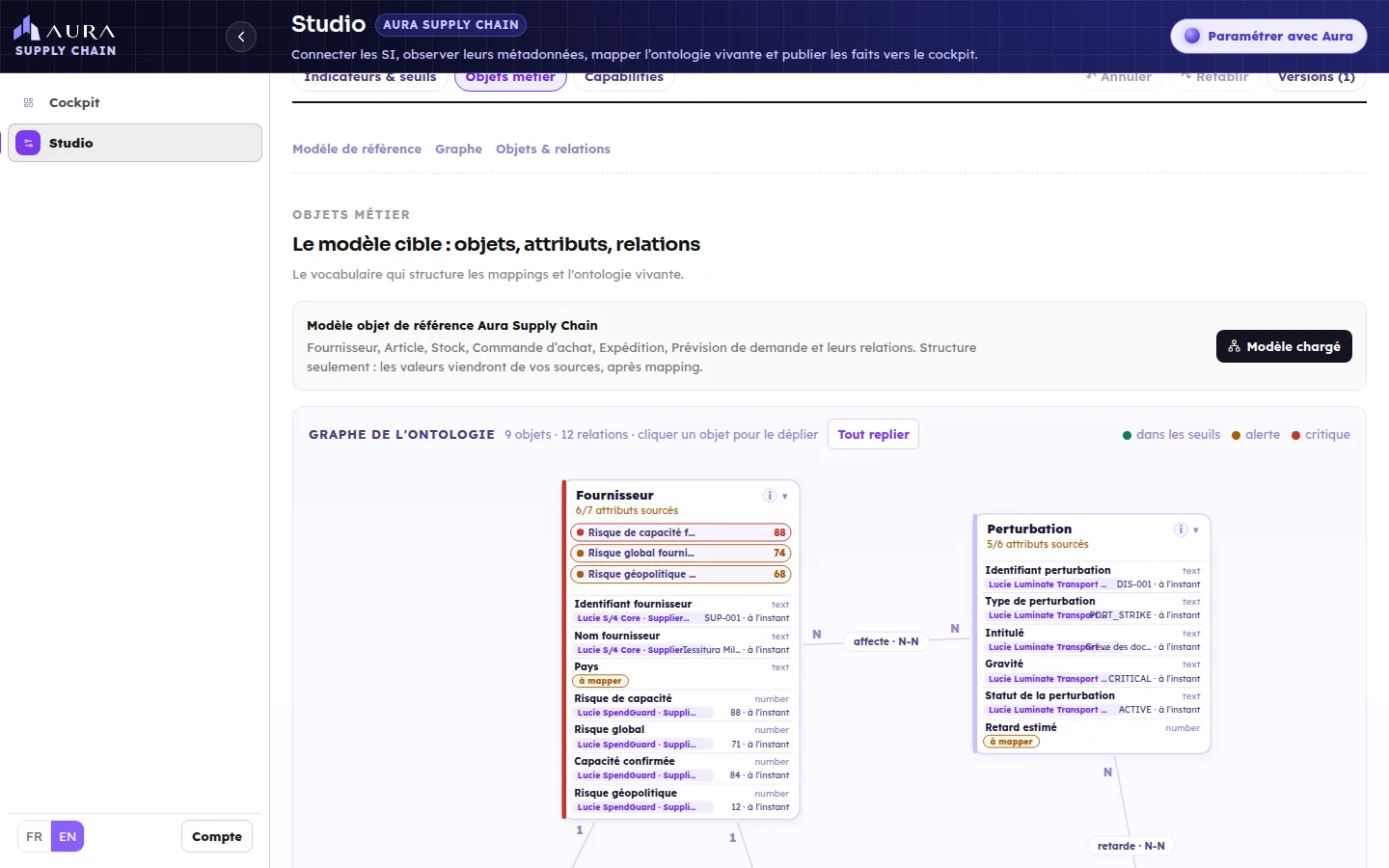
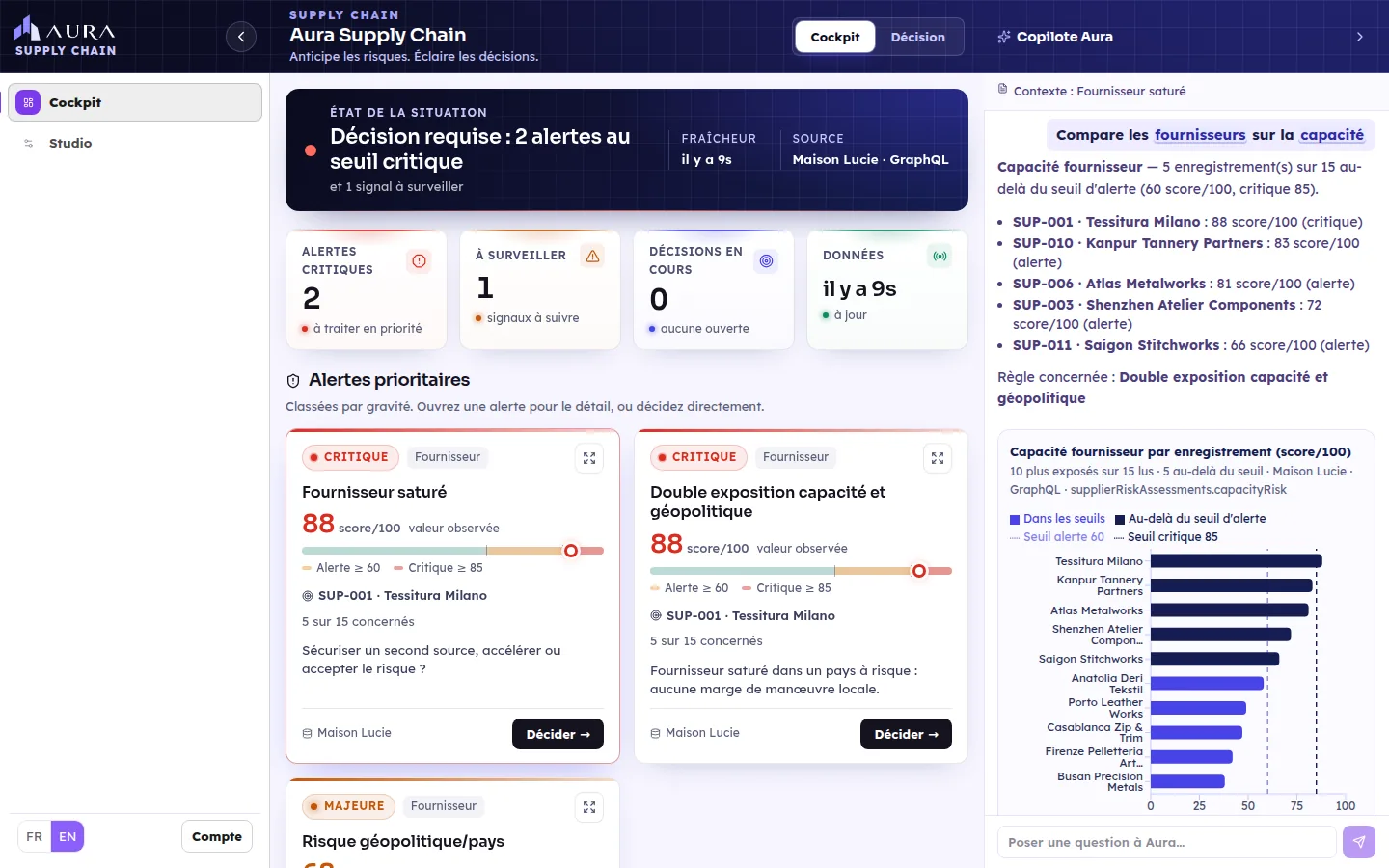
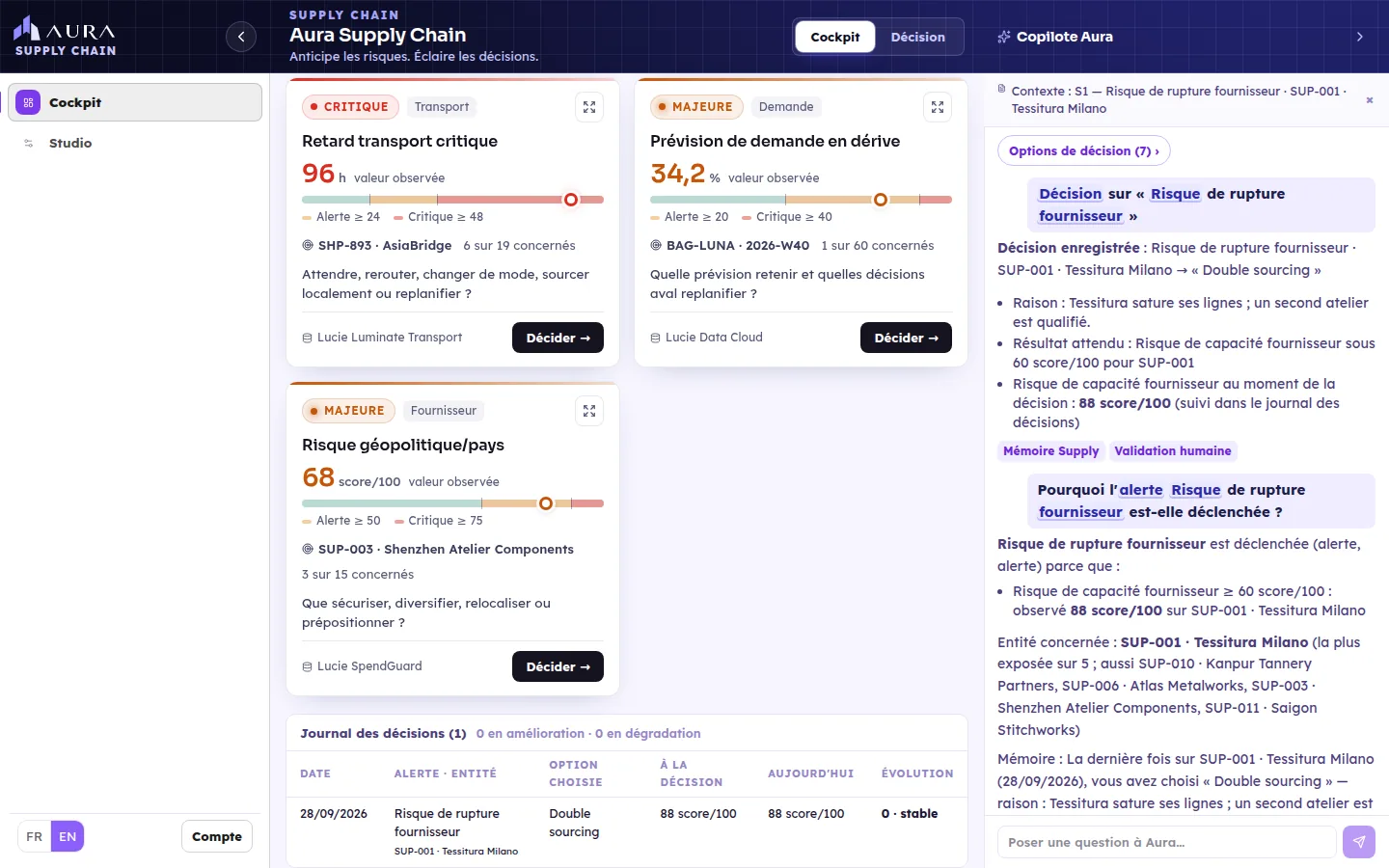
The signal, the cause, the decision.
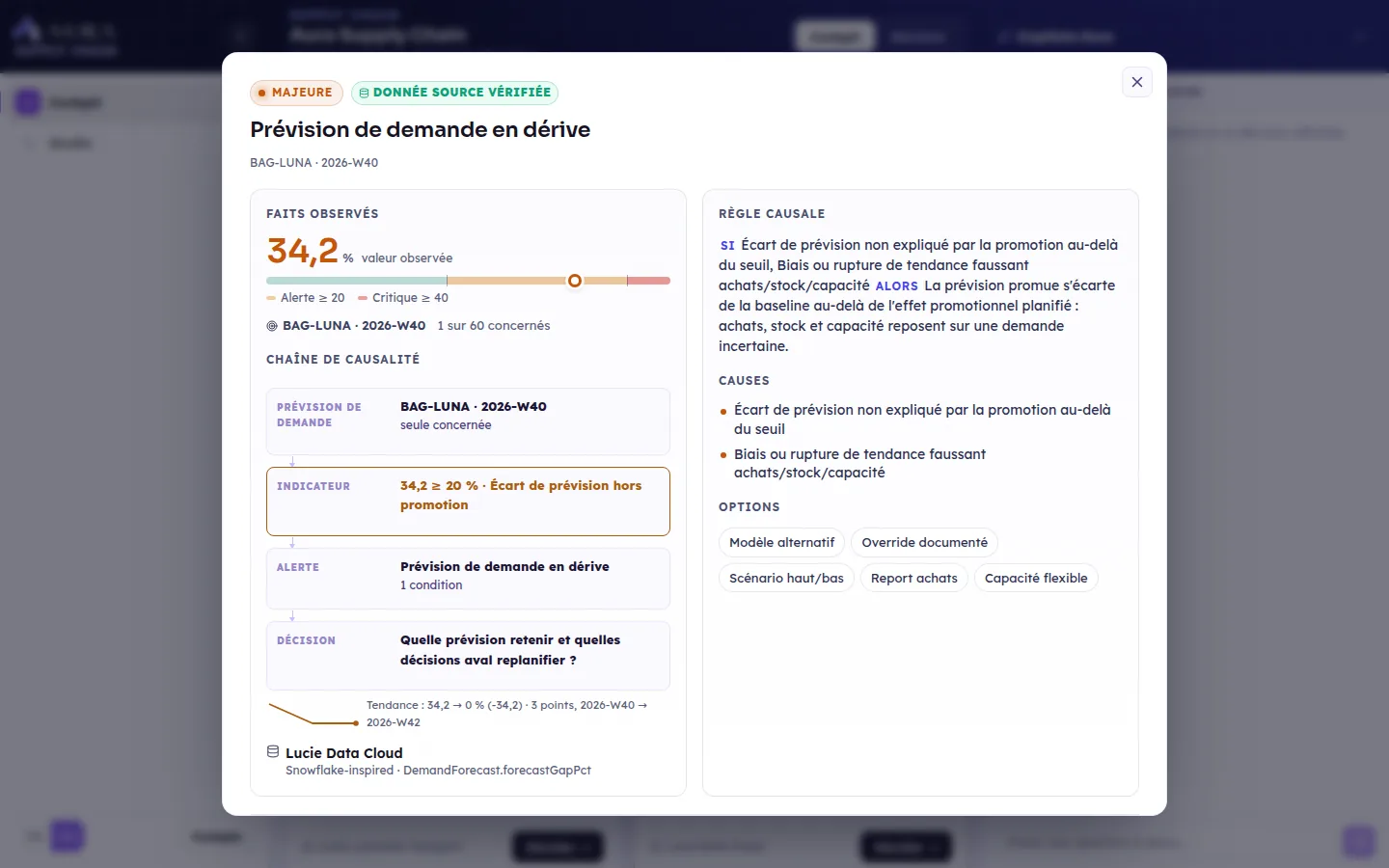
See 4 more screens
The problem
You are not short of data. You are short of time between the signal and the decision.
A supplier lead time drifts, stock cover melts, a shipment slips. The information is somewhere in your systems, but it arrives late, without its cause, and with no one clearly in charge of the call.
Who it is for
- Supply chain and operations leaders accountable for service and inventory
- Procurement and sourcing teams exposed to supplier risk
- Planning teams (S&OP, S&OE) making trade-offs every week
- Every sector: manufacturing, retail, healthcare, energy…
What you live with
- Too many alerts and no economic ranking: everything looks urgent, nothing is quantified.
- Scattered, conflicting data, reconciled by hand in a spreadsheet export.
- Supply, Finance, Sales and Procurement each defend their own reading; mitigation options are assessed by hand.
- Decisions that are slow, barely documented and rarely revisited once made.
What it costs you
- Shortages and late deliveries that erode OTIF and customer trust.
- Safety stock added “just in case”, tying up working capital.
- Expedited freight and last-minute trade-offs that eat into margin.
Why your current tools fall short
- Control towers display alerts, but not the cause, the options or who decides; and nothing links the decision to how your systems evolve.
- Wiring them into your real systems is slow and costly; they risk becoming one more dashboard.
- A language model on its own can produce a plausible but wrong figure: not acceptable when you commit a supplier.
What Aura changes
- The risk spotted in your real data, with its cause and the items affected.
- A decision pre-filled with the facts: your team completes the options, chooses and signs.
- A complete trail (rule, data, author) for the S&OP review and for audit.
- A memory that grows: criteria, assumptions, tipping points and actual outcomes inform the next decision.
What Aura does
How Aura solves it, piece by piece.
Journey
From your sources to a first useful alert, in five phases.
Each Studio phase has its own status light: you always know what is ready, what is awaiting validation and what is blocked. No black box.
Architecture
On top of your systems, not instead of them
You keep your ERP, WMS and BI. Aura reads what is useful, as often as useful, and reasons over an explicit model of your network.
Integrations
Every common enterprise access pattern, without forcing a new data platform on you.
See the connectors
- RESTHTTP/JSON APIs
- OAuth2Delegated authentication
- SOAPLegacy web services
- GraphQLTargeted queries
- KafkaEvent streams
- FichiersCSV, Excel, SFTP
- BatchScheduled loads
- MCPModel Context Protocol
L1Your systems
- ERP
- WMS
- TMS
- APS
- Files
- Events
L2Studio
- Connectors
- Semantic mapping
- Ontology
- Causal rules
L3Engine
- Rule evaluation
- Propagation
- Lineage
L4Cockpit
- Alerts
- Copilot
- Pre-filled decision
Governance
Decisions you can defend in front of a board or an auditor.
See the other safeguards
Scope
The right tool for the right problem.
If your situation is different, here is where to go.
Facing a strategic call?
Invest, reorganise, relocate, with no connected data: Aura’s decision engine handles it too, in a workshop.
See Aura DecideTransforming your IT landscape?
Mapping the current state, designing the target and the roadmap: that is what Aura Architect is for.
See Aura ArchitectNot one more data warehouse
Aura reads your sources as often as needed; it replaces neither your ERP nor your BI, and does not impose a new one.
Gains and cost
Every day gained before a shortage widens your options.
Reallocating stock, expediting freight, switching to a second source: everything costs less before the shortage than after it. The value of Aura Supply Chain lies in that gap between signal and decision.
What you gain
- The signal becomes a decisionA causal rule spots the situation, the alert arrives with a pre-filled record, the team chooses and signs.
- Decisions on recordWho decided what, on which data and under which rule: the next similar alert is handled faster.
- Your systems connected, no big buildThe ontology describes your business data once; rules build on it, whatever the source system.
What it takes
- An express diagnostic of about 2 weeks, then a subscription on a defined product or supplier scope.
- Aura reads your existing sources (ERP, EDI, files): no data warehouse to build.
- Your ERP and planning tools stay in place.
FAQ
Your questions, answered
Do we need to connect our whole landscape before we start?
No. Two or three sources that carry your priority risk are enough for a first useful alert. That is exactly what the Express diagnostic is for.
Can Aura raise a false alert on its own?
No. Alerts come exclusively from causal rules evaluated on your real data. The language model helps map your fields (under human validation) and explain; it creates neither alerts nor figures.
Is it specific to one sector?
No. The ontology and rules are configured for any supply chain: manufacturing, retail, healthcare, energy, food.
What does the public demo show?
The synthetic “Maison Lucie” system. All its data is fictional and illustrates the Studio → Cockpit → Decision journey.
Where is our data hosted?
Aura reads sources rather than copying everything. Hosting and the choice of language model are agreed with you, including sovereign options.
Next step
Bring a real problem. Work it on the platform.
Start the 14-day trial, connect your sources and follow every decision with its proof. Subscribe when you are ready.