
Transformation leaders
Test ideas before committing
- Scenarios compared on the same criteria
- Impacts visible on capabilities, applications and flows
- Objectives and OKRs tied to value chains
- Action plan derived from the decision
Aura Architect
From stakeholder needs to the decision, Aura builds a complete, consistent and traceable architecture model. Test your ideas and their system-wide coherence before committing the programme.
Self-service, no installation, no meeting first. Solo plan: 14-day trial, cancel in one click. Hosted in the European Union.
Why now
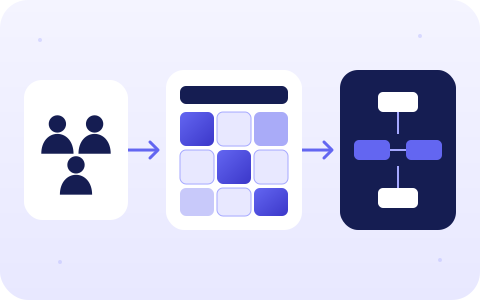
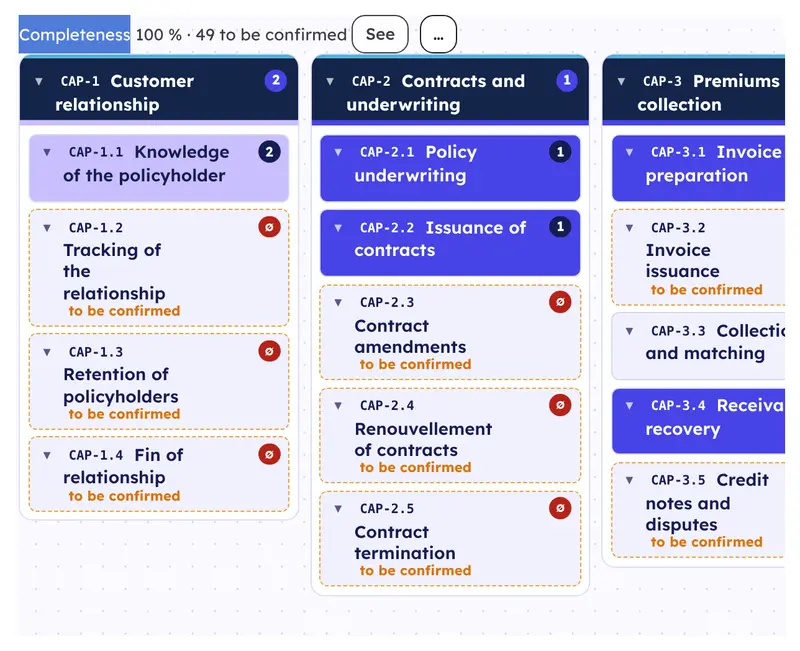
Every programme must link needs, capabilities, applications, flows and requirements, then choose a trajectory.
This work is manual, scattered across workshops, spreadsheets and diagrams. Inconsistencies surface late, when they are expensive.
How do you test an idea, and its effects on the whole system, before committing budget and teams?
A single model, generated from your request, checked by rules, where every element says why it exists. Aura proposes; you validate.
What you get
The headline benefit: test your ideas and their system-wide coherence before committing.
Transformation leaders
Architects
Business teams
CIOs
How it works
Who expects what: each stakeholder and their needs, drawn from your request and documents.
Each need gets a response scenario; its steps become the functions to cover.
A map of 5 to 9 level-1 capabilities, ordered along the value chain, without duplicates.
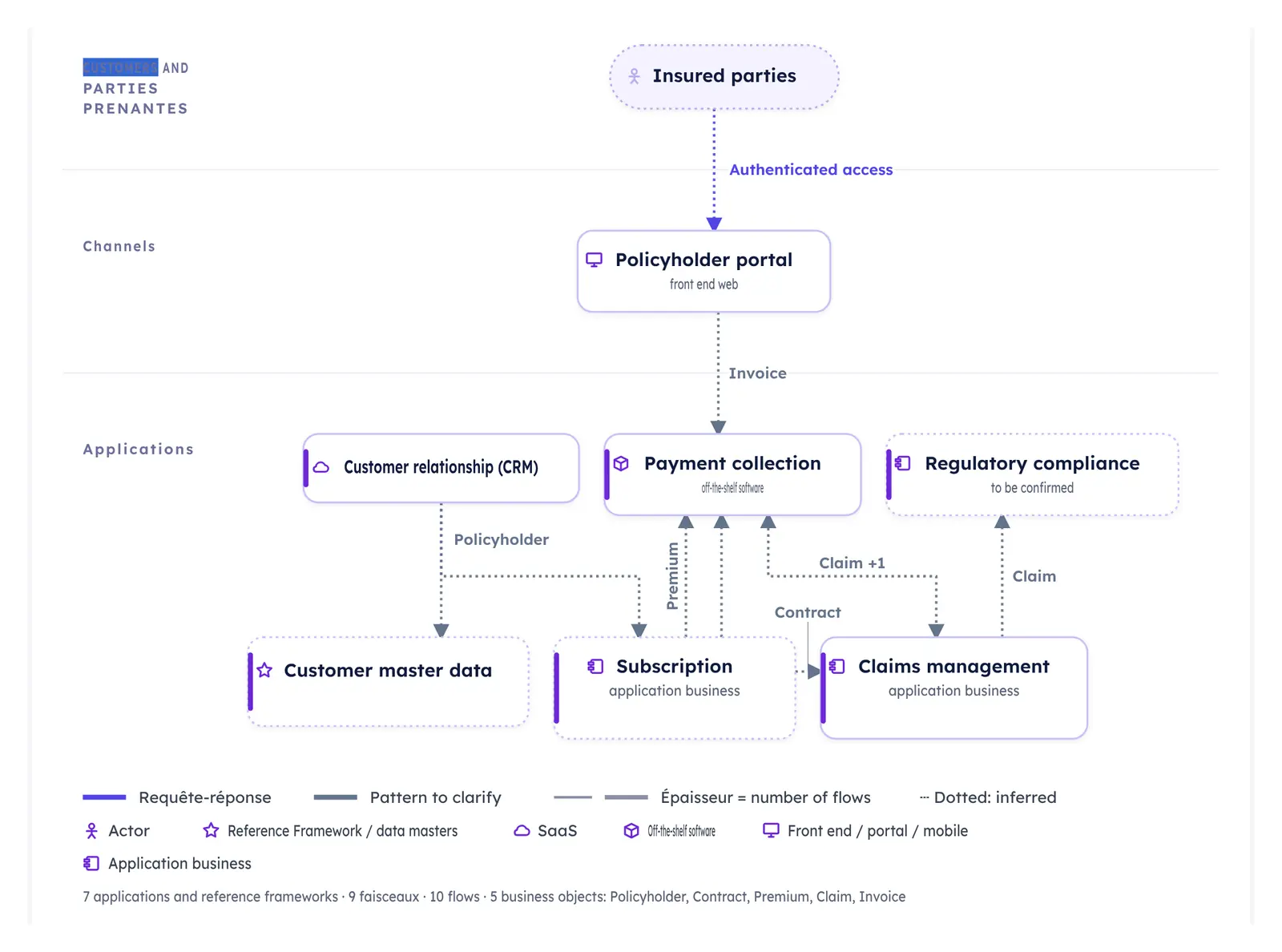
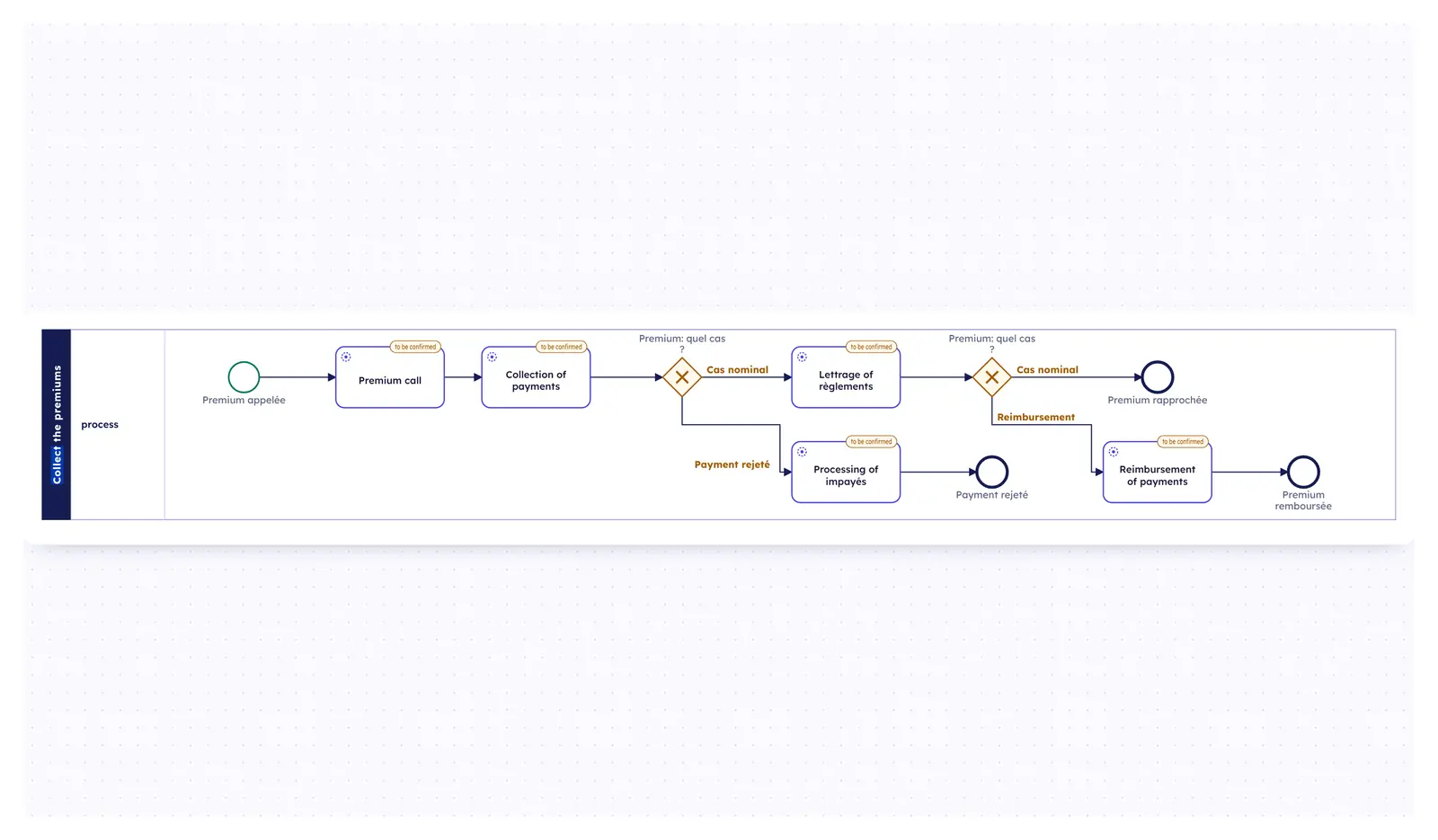
Applications, flows, processes and requirements aligned with capabilities, view by view.
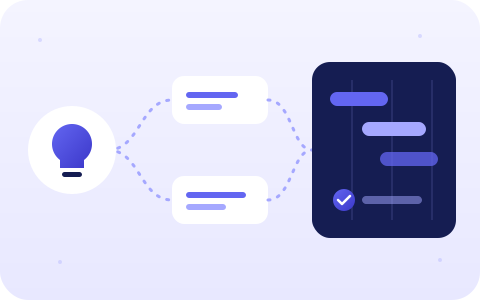
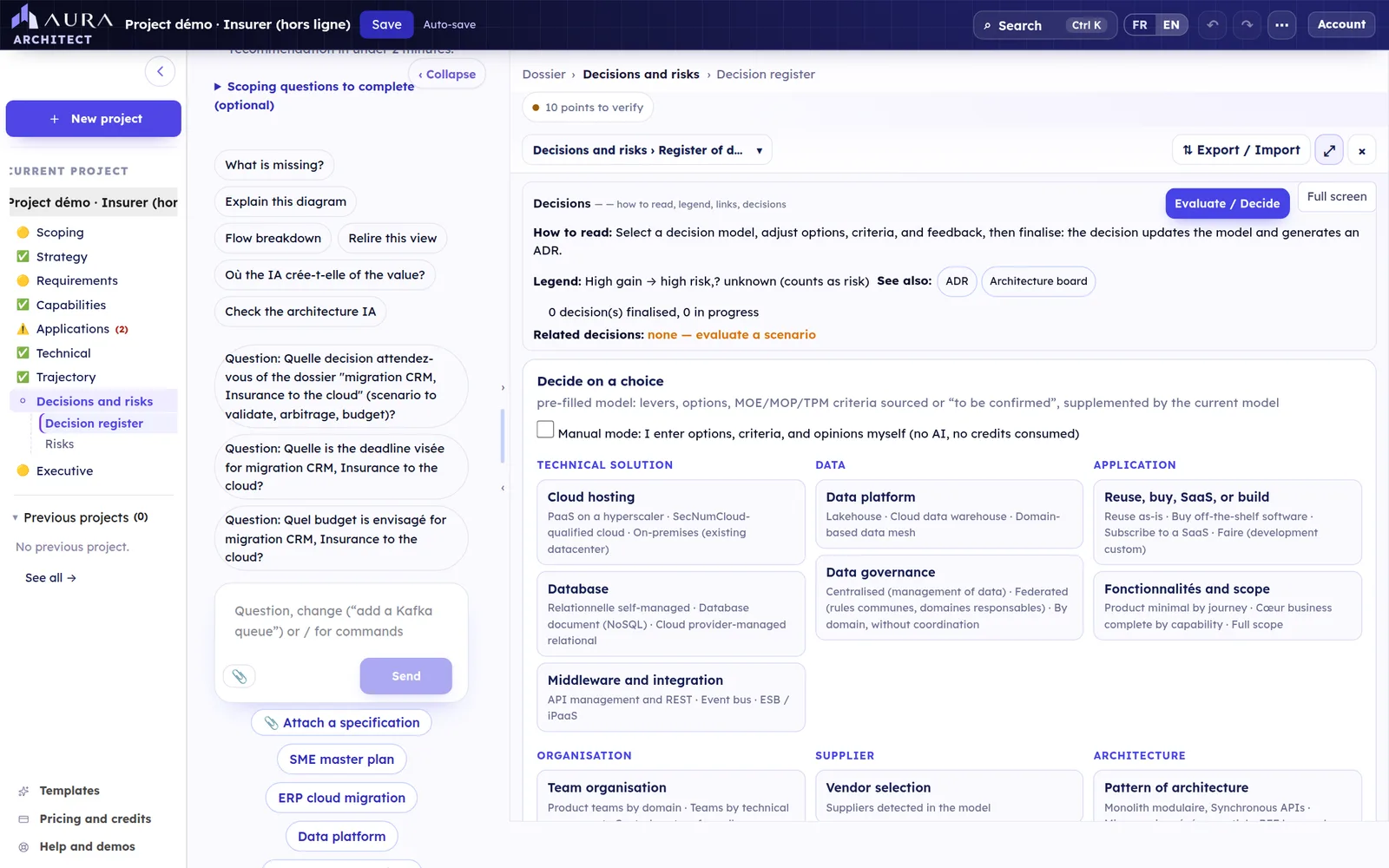
Levers, ✦ options, KPI tree, compared scenarios, OKRs and action plan.
What makes Aura different
Whatever the request does not attest is marked “to be confirmed”, never presented as fact.
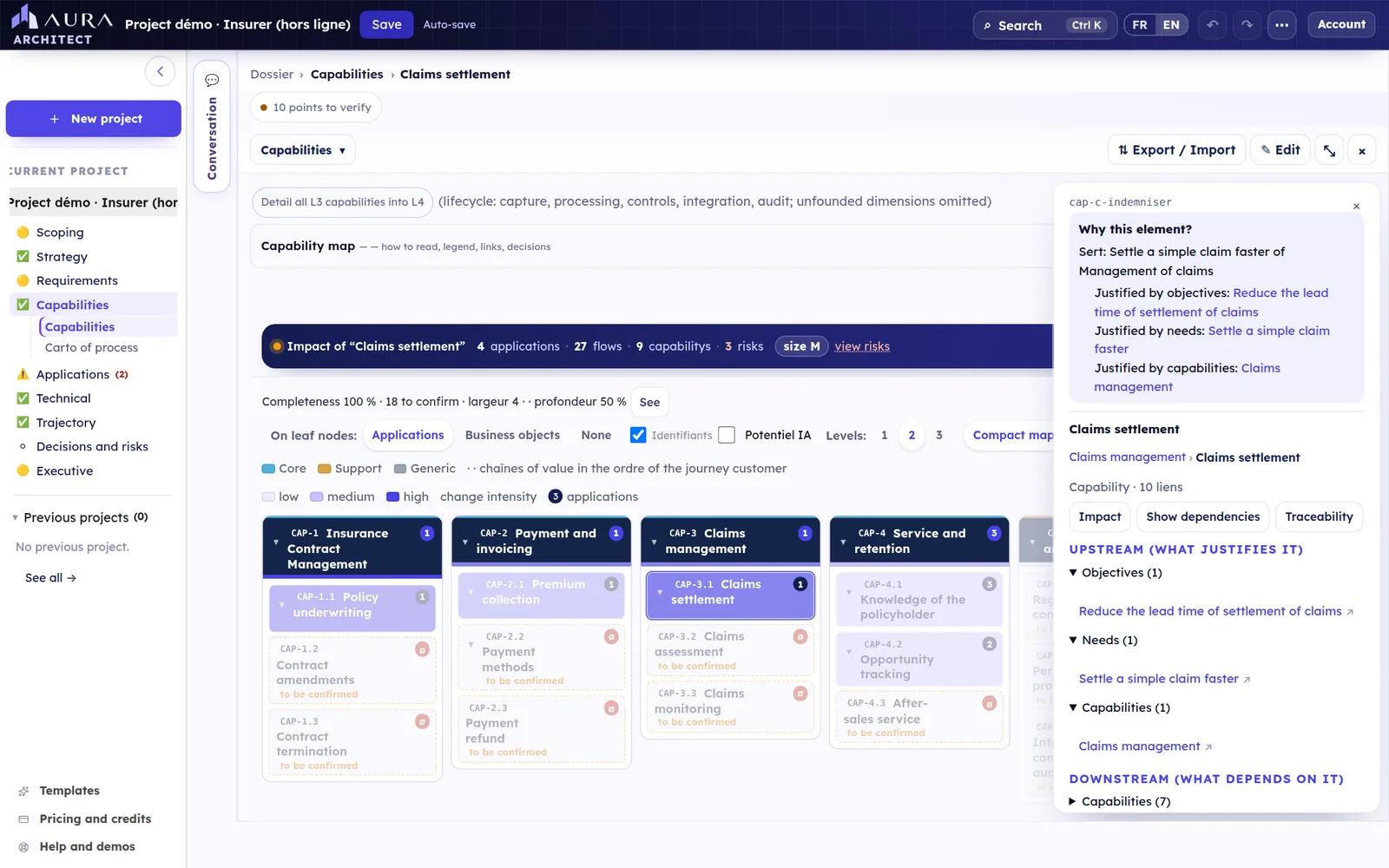
A completeness indicator, with the list of what remains to confirm. 100% on the demo study.
A background business review for any sector, filtered by rules.
Recent, widespread sector practices proposed, at most two per capability, always to be confirmed.
Each capability states which need it serves, through which use case and scenario.
The process is deterministic: you can review, compare and replay.
Nothing is applied without your validation. Hosted in the European Union.
The application
All taken on the offline insurer demo study.
The right tool for each function
For each function in your architecture, Aura simply indicates what fits best: automated rules, a supervised language model, or a human decision. Each recommendation is explained and remains editable.

When the expected result is known, stable and verifiable: checks, calculations, thresholds, routing.
Checking that an order stays within authorised limits.
When text of varying form must be read, summarised or drafted, with rules that check the output and a person who reviews it.
Extracting the key points of an incoming letter to prepare its handling.
When the stakes carry accountability, affect people or depend on a trade-off between objectives.
Granting an exception, arbitrating between cost and service.
The recommendation starts from the nature of each function; nothing is applied until you validate it.
Every sector
For each sector: an excerpt of the value chain and a ✦ idea proposed by Architect from a typical request.
Production and manufacturing → Equipment maintenance → Product quality
Predictive maintenance
Production and manufacturing → Equipment maintenance → Logistics and delivery
Batch traceability
Contracts and subscription → Payment and invoicing → Complaints and disputes
Usage-based pricing
Replenishment and stock → Payment and invoicing → Service and loyalty
Split payment
Citizen relations → Requests and cases
Online appointment booking
Bookings and ticketing → Flight operations → Equipment maintenance
Baggage geolocation
Customer financing → Guarantees and collateral → Loan contracting
Bank account aggregation
Insurance contract management → Claims management → Service and loyalty
Photo-based damage estimation
Care pathway → Payment and invoicing
Patient teleconsultation
Business operations → Payment and invoicing → Service and loyalty
E-invoicing
Examples produced by Architect’s offline generation (no language model) on typical requests, generated in French and translated here. ✦ ideas remain “to be confirmed”.
Decisions Control Tower
For decisions too complex for intuition and too short on data for analytics.
Explainable to a board or a regulator. Recomputed as soon as a parameter changes.
See the decision engineDecide, built in
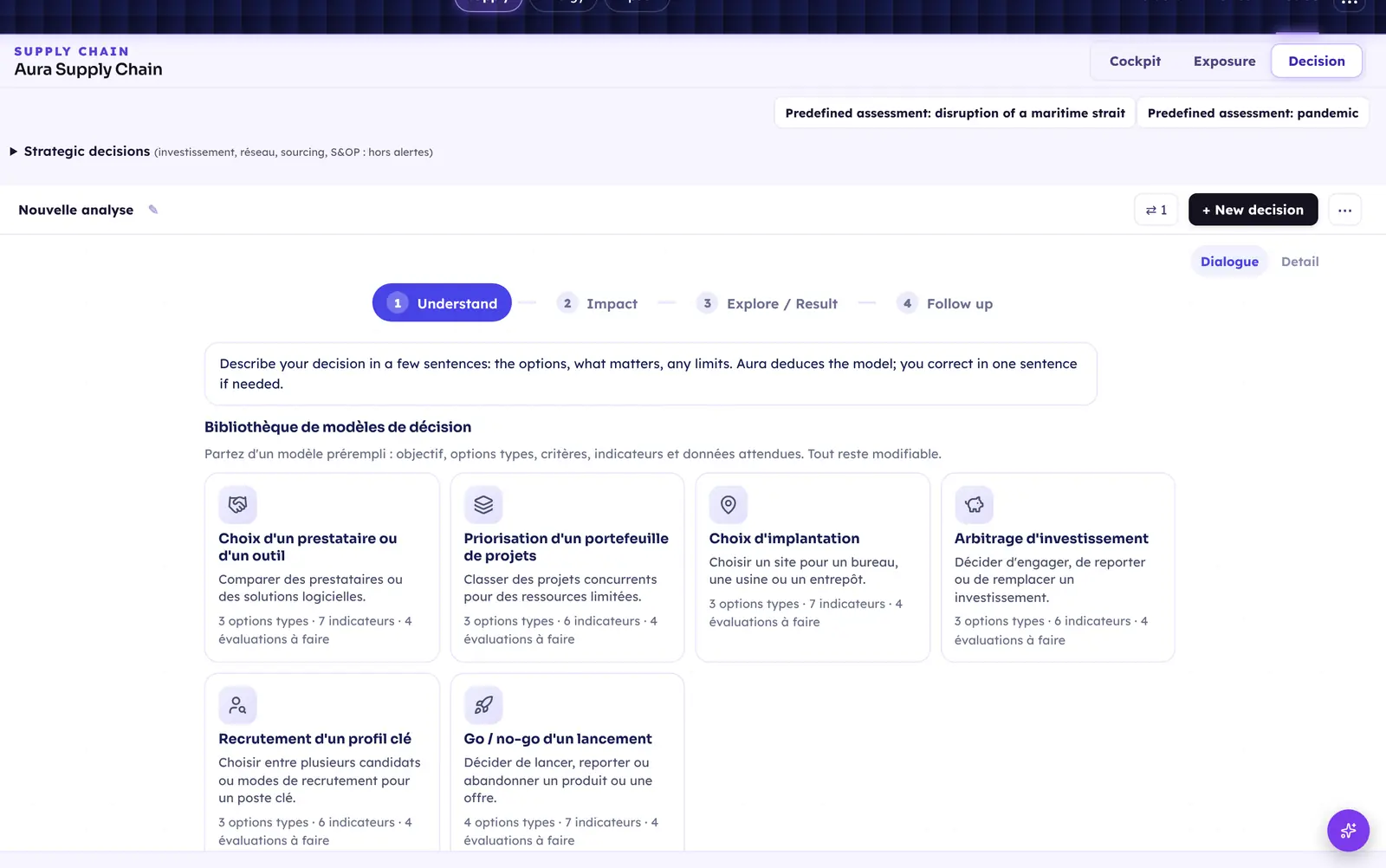
Aura’s decision engine is built into Architect: every architecture choice is compared on the same criteria, and the chosen decision updates the model.
The same engine also serves supply chains, with Aura Supply. Discover
Plans
Prices excl. VAT, taken from the application’s Pricing page. Subscription happens on the platform, with secure payment.
Independent architect, consultant
€79 excl. VAT / month
Architecture team, IT department
€129 excl. VAT / user / month
Group, consulting firm, public sector
€129 excl. VAT / user / month + platform fee from €6,000 / year
Already subscribed? Go to the platform
Resources
The approach Aura Architect applies, explained simply, so that you can review it and discuss it.
A capability map is only useful if each capability can say who it serves and why. Starting from stakeholders keeps it honest.
ReadNot every function needs the same kind of tool. Choosing well starts with asking what the function really requires.
ReadAn idea can look excellent on its own and still disrupt the rest of the system. Test it on the whole model before committing budget and teams.
Read